
Most of what you will read this week says the H-2B cap for the winter half of fiscal year 2027 is closed. On the morning of 27 August 2026, USCIS's own counter says it is not.
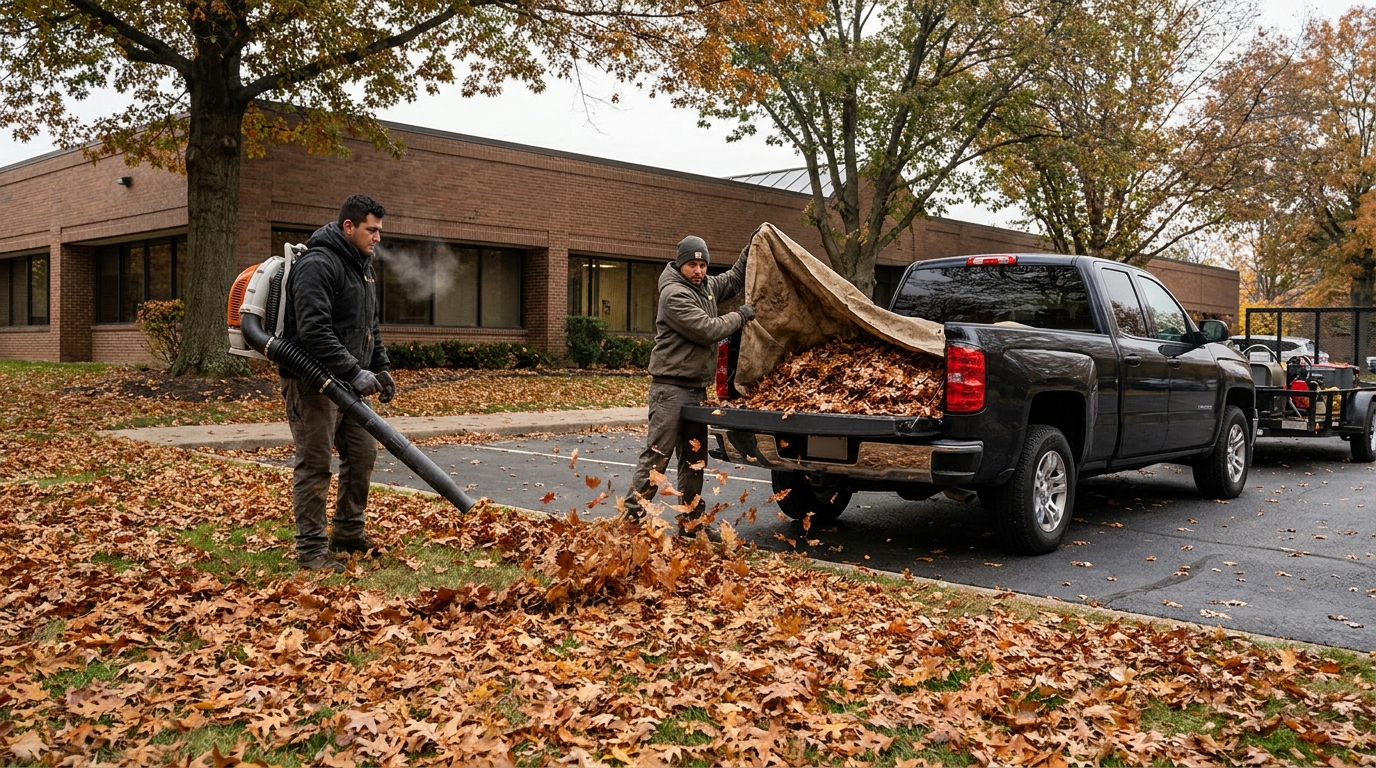
That gap matters, because the winter half of FY2027 runs 1 October 2026 through 31 March 2027 - which is fall cleanup, leaf season, and the entire snow season for anyone north of the Mason-Dixon line. If you run a landscaping company and you believed the door had already shut, you would stop looking. It has not shut. It is close, and the arithmetic is more complicated than a subtraction, and the more consequential deadline is not this one at all.
Here is what the primary sources actually say, what the calendar actually requires, and what to do about the part of it you cannot control.
What USCIS's own counter says
USCIS maintains a page called Cap Count for H-2B Nonimmigrants and updates it as petitions arrive. Read live, its last count was stamped 08/25/2026 - two days ago:
| Cap type | Cap amount | Beneficiaries approved | Beneficiaries pending | Total beneficiaries | Date of last count |
|---|---|---|---|---|---|
| H-2B: first half of FY2027 | 33,000 | 22,257 | 7,868 | 30,125 | 08/25/2026 |
| H-2B: second half of FY2027 | 33,000 | - | - | - | not yet counting |
And in the agency's own words, directly above that table: "USCIS is currently accepting petitions that are subject to the H-2B cap for the first half of FY 2027 and have employment start dates on or after Oct. 1, 2026."
So the window is open. That is the correction, and it is worth making because the alternative - a business owner reading a summary, concluding the season is lost, and not calling anyone - is a decision made on a wrong fact.
Why 33,000 minus 30,125 is not 2,875 workers
This is the part almost every summary drops, and it is printed in a footnote on the same page. The total-beneficiaries figure counts people named on approved or pending petitions who could potentially be counted against the cap. USCIS states plainly that the number "will typically exceed the actual cap to allow for withdrawals, denials, and approvals for which no visa is issued."
Read that twice, because it cuts both ways.
- It means 30,125 overstates real usage - some of those petitions will be withdrawn, denied, or approved for a worker who never gets a visa. Actual consumption will land below 30,125.
- It also means the headline count is designed to run past 33,000 before the cap is genuinely exhausted. So a simple subtraction giving you "2,875 slots left" is not a number you can plan a crew around in either direction.
The operative reading is narrower and more useful: at 91.3% of the nominal cap with roughly five weeks until the fiscal year starts, the winter half is late-stage but not closed. If you have a certified application in hand and have not petitioned, that is a call to make today, not a decision to defer. If you do not have a certification, the winter half is almost certainly gone for you - not because the cap is full, but because of the calendar in the next section.

The calendar that actually governs your spring crew
The cap gets the headlines. The filing window is what actually decides whether you have people, and it is fixed in regulation rather than announced.
Under 20 CFR Part 655, Subpart A - the rule governing temporary labor certification for H-2B - the text is unambiguous: "A completed Application for Temporary Employment Certification must be filed no more than 90 calendar days and no less than 75 calendar days before the employer's date of need."
That is a 16-day window, and it does not move. Work it out for the two dates that matter to a landscaping company:
| Date of need | Covers | Filing window (90 to 75 days prior) | Status as of 27 Aug 2026 |
|---|---|---|---|
| 1 October 2026 | Fall cleanup and the FY2027 snow season | 3 July - 18 July 2026 | Closed. Ended 40 days ago. |
| 1 April 2027 | Spring rush through the FY2027 summer | 1 January - 16 January 2027 | Opens in about 127 days. |
Two things fall out of that table immediately.
First, the reason the winter half is effectively closed to newcomers is not the cap - it is that the certification window shut in July. A cap with room in it does you no good if you cannot lawfully file the application that precedes the petition. This is the single most common way the program is misunderstood: people watch the visa counter and miss the certification clock, which runs months earlier and closes hard.
Second, your spring 2027 crew is decided in the first half of January 2027, and 1 January is a federal holiday, so the practical opening is 2 January. That is a two-week window that lands in the deadest part of a landscaper's year, which is exactly why it gets missed. Put it on the wall planner now.
Working backwards from January
Filing on 2 January is not something you can start on 2 January. The Department of Labor's own FLAG portal lays out the sequence, and one step has its own long lead time:
- Prevailing wage determination first. You must request and obtain a PWD from the National Prevailing Wage Center before filing the H-2B application. DOL advises requesting it at least 60 days before you need it. Sixty days before 2 January is early November 2026 - which means the first real deadline in this whole sequence is about ten weeks away, not four months.
- Then the application and job order. Form ETA-9142B with appendices, a valid PWD tracking number, a copy of the job order filed with your State Workforce Agency, and any agent or recruiter agreements.
- Then US-worker recruitment, on a 14-day fuse. Within 14 days of receiving a Notice of Acceptance you must run the required recruitment: newspaper advertisements, contacting former US workers, and notifying the bargaining representative or posting notice to current employees, plus anything else the Certifying Officer directs.
- Then the USCIS petition, which is the step that touches the cap you were reading about at the top of this article.
The recruitment step is worth dwelling on, because owners frequently treat it as a formality. It is not. It is a real obligation with a real clock attached, and it lands after a notice you cannot schedule.
The supplemental you should not budget on
Every year for several years running, the statutory 66,000 has been topped up by a supplemental allocation, and every year the industry treats it as a near-certainty. Here is what the record actually shows for the most recent one.
For FY2026, the Secretary of Homeland Security, in consultation with the Secretary of Labor, authorized up to 64,716 additional visas - close to doubling the statutory cap. The temporary final rule was published in the Federal Register on 3 February 2026. The joint announcement preceding it came on 30 January and cited a smaller figure of 35,000; the rule as published was 64,716.
Now look at the timing against a season.
FY2026 began 1 October 2025. The supplemental rule was published 3 February 2026 - 125 days into the fiscal year. For a landscaping company that needed crew on the ground for fall cleanup and snow, relief arrived four months after the work started.
Two further constraints on that number, both from the rule's own text. The supplemental visas are available "only to those American businesses that are suffering or will suffer impending irreparable harm, i.e., those facing permanent and severe financial loss, as attested by the employer." That is an attestation you sign, not a box you tick. And the visas are "distributed in three allocations based on the petitioner's start date of need" - so it is not one pool you can draw from whenever you like.
As of this morning, no equivalent FY2027 supplemental rule appears in the Federal Register. I checked the published record for H-2B numerical-limitation rules going back to 1 October 2025; the 3 February 2026 FY2026 rule is the most recent one. FY2027 begins in about five weeks.
That is not a prediction that no supplemental is coming. Given the pattern, one probably is. It is a statement about what you can currently plan on, and the honest version is: a supplemental is a possibility with a historical arrival date of February, not a line item you can staff October against.
Where landscaping companies trip on eligibility
Assume the calendar works out. There are three eligibility facts in DOL's own program description that catch green-industry employers specifically.
The need has to be temporary, and temporary means nine months or less. DOL states that with the exception of a one-time occurrence, temporary need "will not be approved for longer than 9 months." A northern maintenance company with a genuine March-to-November season fits this comfortably. A company in Florida, Texas, or southern California that mows twelve months a year has a much harder argument to make, because the work is not seasonal - it is year-round work the company is short-handed for, which is a different problem and not the one this program solves.
The job has to be full-time, defined as 35 or more hours per week. Part-time or split-crew arrangements do not qualify.
The one-time occurrence exception runs up to three years, but it is genuinely a different category - a discrete, non-recurring need - and a recurring seasonal mowing contract is not one, however large.
How big is landscaping's share of this program?
Larger than most people outside the industry realize, and I want to be precise about the sourcing here because the good numbers are old.
The cleanest occupational breakdown I could source is FY2019, summarized from DOL certification data: landscaping accounted for roughly 44% of the jobs certified that year, with forestry next at about 8%, maids and housekeepers 7%, and meat and fish workers 6%. DOL certified about 7,400 employers for roughly 150,500 jobs that year. The National Association of Landscape Professionals has more recently put landscaping at close to 40% of H-2B positions.
Both of those are secondary or trade-association figures and I could not verify a current-year first-party occupational split from DOL's own disclosure files, so treat the exact percentage as directional. What is not in doubt is the rank: landscaping and groundskeeping is the largest single occupational use of the H-2B program, by a wide margin. When the cap binds, this industry is where it binds hardest.
What the program actually costs, and what nobody publishes
I am not going to give you a total, because there isn't a credible one to give and the invented figures floating around this topic are worse than useless. What I can do is name the cost lines the process itself creates, so you can price your own:
- Prevailing wage. You pay the PWD-determined rate, not your local going rate. If the determination lands above what you currently pay domestic crew, that becomes your wage floor for those positions - and it is the single largest variable in the whole exercise.
- Recruitment. Newspaper advertising, the job order, and the administrative time to document contacting former US workers.
- Filing and legal. Government filing fees plus, for nearly everyone, an agent or immigration attorney - this is not a process most owners run unassisted.
- Consular and travel. Visa processing and inbound transportation obligations.
- Housing. Not universally required for H-2B, but frequently offered in practice to compete for returning workers, and a real cost when it applies.
- The cost of failure. The one that never gets priced: you may run this entire sequence, pay for all of the above, and receive nothing, because the cap fills or you land badly in a lottery.
That last line is the honest core of the thing. This is a process with meaningful sunk costs and a genuinely uncertain outcome, and it should be planned as one bet among several rather than as the staffing plan.
The half of this you actually control
If the visas come through, good. If they do not - and for most companies reading this in late August, the winter half already has not - the lever that remains is the same one it always was: do the same revenue with fewer people, or do less revenue at a better margin. Neither is glamorous and both are measurable.
Three things worth doing in the next month, in rough order of payback:
- Measure your drive time honestly before you cut anything. Pull last month's stop list and count the windshield hours, not the billable hours. Route density is where short-handed crews find capacity that does not require hiring anyone. A crew that loses ninety minutes a day to a badly ordered route is a crew you have already partly lost.
- Rank your contracts by margin, not by revenue. If you are going into a season short-handed, you are going to shed something. Deciding that on purpose in September beats discovering it in November. Our write-up on landscaping profit margins covers how to work that out per job rather than in aggregate.
- Reprice the work you keep. If labor is scarcer and costs more, that belongs in the price. The uncomfortable conversation is a letter, and we have a template and a walkthrough for it in how to write a lawn care price increase letter.
The bidding side matters too, particularly for commercial work where the contract terms outlast the labor market that priced them - how to get commercial landscaping contracts goes into how those get won and what to watch in multi-year terms. And if you are trying to work out what a job should cost before any of this, how to bid landscaping jobs is the starting point.
Where Landscapey fits, and where it does not
Being straight about this, since the topic is labor and we are a software company writing about it.
Landscapey does not help you hire. There is no H-2B module, no compliance tracking, no document vault, and no payroll. It also does not have separate crew logins yet - it is one login for the business, so it cannot serve a crew in the field the way a multi-seat platform can. If crew-level access is what you need, we are not the answer and we would rather you knew that now.
What it does do is the scheduling, route optimization, recurring job, and invoicing side - the part of the problem that decides how much work a short-handed crew can actually complete in a day, and whether the invoices go out when the work is done. If the constraint you are managing this fall is capacity rather than headcount, that is the half worth tightening. Our landscaping maintenance software write-up covers the recurring-work side, and pricing is one plan with no per-seat ladder.
Frequently asked questions
Is the H-2B cap for winter 2026-2027 closed?
Not as of USCIS's count dated 25 August 2026, which showed 30,125 total beneficiaries against a 33,000 cap and stated the agency is still accepting petitions with start dates on or after 1 October 2026. But the certification window for a 1 October date of need closed on 18 July 2026, so in practice the winter half is only reachable if you already hold a certification.
When do I file for a spring 2027 crew?
For a 1 April 2027 date of need, the regulation gives you 1 January through 16 January 2027 - no earlier than 90 days and no later than 75 days before the start date. Since 1 January is a federal holiday, plan on 2 January. Request your prevailing wage determination around early November 2026 to have it in hand in time.
Will there be a supplemental allocation for FY2027?
Unknown. There is no FY2027 supplemental rule in the Federal Register as of 27 August 2026. The FY2026 rule authorized up to 64,716 extra visas but was not published until 3 February 2026, 125 days into that fiscal year. Historically likely; not something to staff against.
Does my year-round mowing company qualify?
Probably not on a seasonal basis. DOL will not approve temporary need for longer than nine months except for a one-time occurrence, so a company that mows twelve months a year is describing a permanent staffing shortfall rather than a seasonal one, which the H-2B program is not designed to fill.
What happens to unused H-2B numbers?
Unused numbers from the first half of a fiscal year become available for the second half of that same fiscal year. Unused numbers do not carry over into the next fiscal year - they expire on 30 September.
Are extensions and worker transfers counted against the cap?
Generally no. Workers already in the US in H-2B status who extend their stay, change employers, or change the terms of employment are not normally cap-subject, and neither are workers already counted against the cap in the same fiscal year when the employer names them and indicates so. Spouses and children in H-4 status do not count either. If the cap leaves a crew slot unfilled for a whole season, the comparison stops being machine-versus-labor and becomes machine-versus-turning-work-away — which is the one case where the robotic mower payback math gets much easier to justify.
Sources and limits
- Cap figures are from the USCIS Cap Count for H-2B Nonimmigrants page, read live on 27 August 2026; the page's own count is stamped 08/25/2026 and its last-reviewed date is the same. USCIS updates this page as petitions arrive, so the numbers here have a short shelf life - check the page rather than this article before acting.
- The "will typically exceed the actual cap" caveat is quoted from the footnote on that same USCIS page.
- The 90-to-75-day filing window is quoted from 20 CFR Part 655, Subpart A, read from the current eCFR text. The specific calendar dates in this article are my arithmetic from that rule, not dates published by DOL.
- Process steps, the nine-month temporary-need limit, the 35-hour full-time definition, the 60-day PWD lead time, and the 14-day recruitment fuse are from DOL's own FLAG portal H-2B program page.
- The 64,716 supplemental figure, the 3 February 2026 publication date, the irreparable-harm standard, and the three-allocation structure are from the Federal Register rule "Exercise of Time-Limited Authority To Increase the Fiscal Year 2026 Numerical Limitation for the H-2B Temporary Nonagricultural Worker Program." The absence of an FY2027 equivalent is from a Federal Register search of H-2B numerical-limitation documents published since 1 October 2025, run on 27 August 2026.
- Occupational share percentages are secondary sources and are dated - the 44% figure is FY2019 DOL certification data as summarized by a third party, and the roughly 40% figure is from a trade association. I could not verify a current first-party split. Treat both as directional; the ranking is not in doubt, the decimal is.
- No cost totals are given because I could not source a defensible one. The cost lines listed are derived from the process steps themselves.
- This is not legal advice. H-2B filings are technical, the deadlines are unforgiving, and nearly every employer who does this successfully works with an agent or immigration attorney. Use this to know what to ask and when, not as a substitute for asking.