
Ask a landscaper how the business is doing and most will quote you a revenue number: "We'll do $400,000 this year." It sounds healthy. But revenue is the most flattering figure in your business and the least useful. The number that actually decides whether you can pay yourself a real wage, replace a blown mower deck, or survive a slow February is your profit margin — what's left after every cost of running the route is paid. Two companies can each bill $400,000 a year while one owner takes home $80,000 and the other takes home $12,000. The difference is margin, and margin is one of the few things in this business you genuinely control.
This guide breaks down what a landscaping profit margin really is, what counts as healthy at each stage of growth, where the money quietly leaks out, and the concrete levers that widen the gap between what you charge and what you keep. The principles hold whatever tools you run on — though tracking them honestly is far easier inside landscaping software that watches your jobs, expenses, and invoices in one place instead of three.
Labor is the line that moves margin fastest, and in 2026 part of it is decided in Washington rather than in your yard. If you use seasonal visa labor, or are weighing it, the FY2027 H-2B picture for landscaping companies covers the cap count, the January filing window that decides a spring crew, and why the supplemental allocation historically arrives four months into the season.
There is a whole category of software built around the arithmetic below: load your real overhead, derive an hourly rate that carries it plus your target profit, then cost completed jobs back against the estimate. SynkedUP is the clearest example, and it publishes its own revenue floor - over $200k, buy it; under $200k, use free resources. Here is what that costs, and the test for whether a pricing error is already costing you more than the software would.
Margin work usually stops at the job. The line that undoes a good season sits outside it: a two-person crew at $52.80 an hour fully loaded costs $42,240 across a 20-week off-season, and per-visit billing puts exactly $0 against it. We costed the four standard off-season answers - the best-known one, holiday lighting, covers about three weeks of the twenty at a realistic attach rate.
One line has to come out before any margin figure means anything, and it is usually the one left in: your own wage. On a 60-client book at $52 a visit, $41,148 reaches the owner - but $33,792 of that is payment for 1,280 hours on the mower at the same rate you pay an employee, and only $7,356 is what the business paid you for owning it. That split is the whole difference between a 41% draw and a 7.4% return, and most published owner-pay tables print it as one number.
Margin arguments usually start too late in the sum. On the 60-client book used throughout these posts, crew cost is $35.20 a visit and overhead adds $12.97, which puts break-even at $48.17 a stop, or $72.26 an hour. Set that against the four pricing charts ranking for this trade and their eight published hourly endpoints: six of the eight sit below it. Margin is not what you have left after a bad rate - it is decided by the rate. The full workup is here.
Capital purchases deserve the same treatment as rates, and one of them is arriving on a regulatory clock. Converting a single two-person crew from gas to battery blowers costs about $8,346 more than replacing the gas gear in the typical cleanup case. On the 60-client book used throughout these posts, each client returns $537.60 of contribution across a season - so that one purchase consumes the entire season margin of 15.5 clients, a quarter of the whole book, for equipment that does the same job slightly worse. The workup, and the cheaper way through it.
Gross margin vs. net margin — and why landscapers confuse them
"Profit margin" is really two different numbers, and mixing them up is how an owner talks themselves into believing a struggling business is fine.
- Gross profit margin is revenue minus the direct cost of doing the work — crew wages on the job, fuel, materials, and the equipment wear the job burns — expressed as a percentage of revenue. It answers one question: does my pricing cover the work itself?
- Net profit margin is what's left after everything: those direct costs plus overhead (office, insurance, software, marketing, the truck payment, your unbillable admin hours) and taxes. This is the real "did I make money this year" number.
The math is simple:
- Gross profit margin = (Revenue − Direct job costs) ÷ Revenue × 100
- Net profit margin = (Revenue − All costs) ÷ Revenue × 100
Say a $1,200 paver patio costs you $400 in pavers and base, $260 in crew labor, and $40 in fuel and equipment. Direct cost is $700, so gross profit is $500 — a 42% gross margin. Healthy. But once you spread this job's share of insurance, your estimating time, the truck, and the office across it, net profit on that same patio might be $150 — a 12% net margin. Both numbers are true. Only the second one pays your mortgage. Owners who quote gross margins to feel good are the ones blindsided at tax time. If you want that overhead line priced rather than estimated, we worked out what a job's share of insurance actually comes to on a 60-client book: $92.35 per client per year, or $2.89 a visit.
What's a healthy landscaping profit margin?
Across the industry, established landscaping companies generally run a gross margin of 30–50% and a net margin of 5–20%. Where you should land depends almost entirely on your stage — net margin actually compresses as you grow, because overhead and non-billable management time climb faster than most owners expect.
| Stage | Typical gross margin | Typical net margin | What's driving it |
|---|---|---|---|
| Solo / owner-operator | 45–55% | 20–30% | You are the labor; almost no overhead, but no leverage either |
| Early-stage, 1–2 crews | 35–50% | 10–15% | First payroll and insurance hit; pricing often still too low |
| Growing, multiple crews | 30–45% | 8–12% | Office, managers, and equipment fleet add real overhead |
| Mature / well-run | 35–50% | 10–20% | Systems and pricing discipline pull net back up |
The rule of thumb most landscaping financial coaches land on: if your net margin is under 10%, you have a pricing or efficiency problem, not a growth problem. Adding more revenue at a thin margin just makes you busier and broker. The fix is widening the margin on the work you already do before you chase the next ten accounts.
Where the margin actually goes
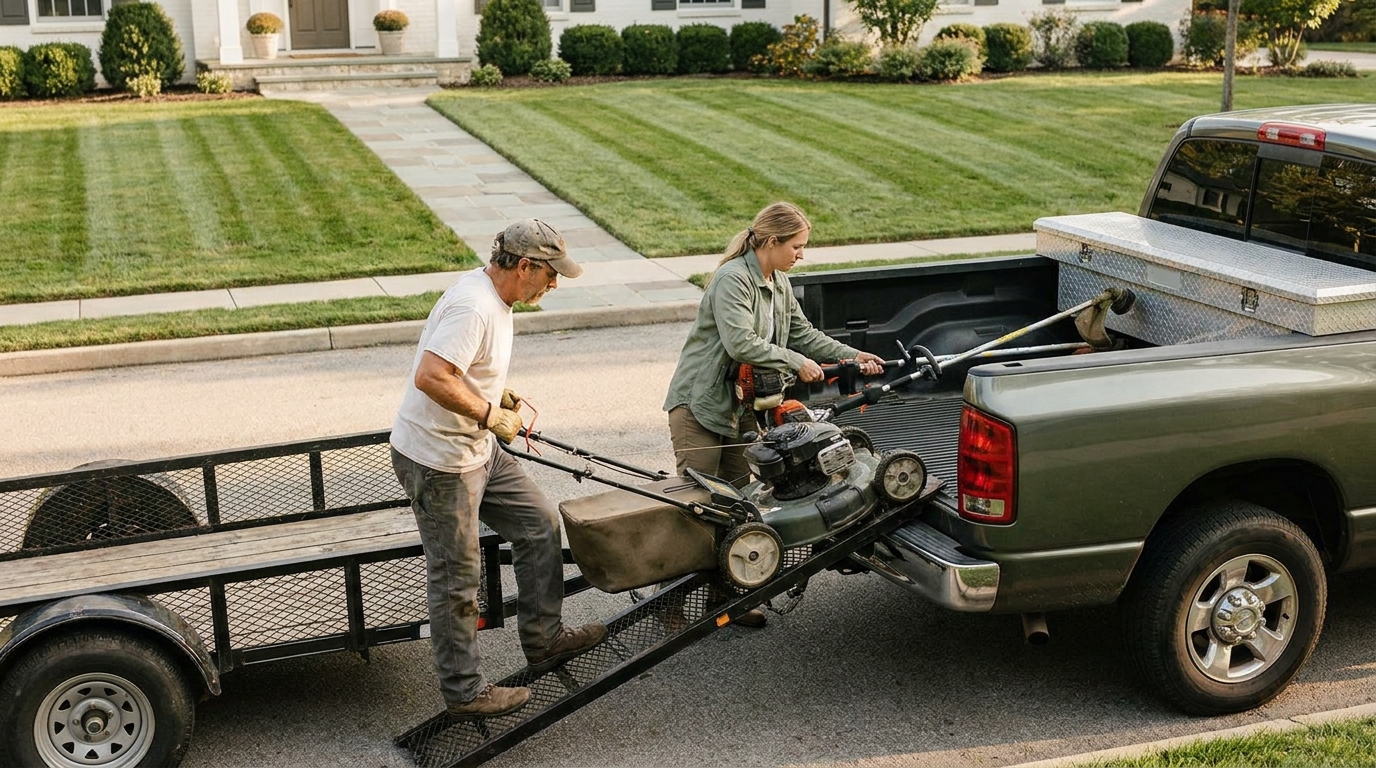
It's easier to defend your margin when you can see exactly where it's spent. Here's a realistic profit-and-loss for a two-crew maintenance company billing $400,000 a year:
| Line item | Annual | % of revenue |
|---|---|---|
| Revenue | $400,000 | 100% |
| Crew labor (incl. payroll taxes) | $160,000 | 40% |
| Materials & disposal | $32,000 | 8% |
| Fuel | $24,000 | 6% |
| Equipment & repairs | $28,000 | 7% |
| Gross profit | $156,000 | 39% |
| Insurance | $18,000 | 4.5% |
| Office, software & admin | $22,000 | 5.5% |
| Marketing | $12,000 | 3% |
| Owner / management salary | $48,000 | 12% |
| Net profit (pre-tax) | $48,000 | 12% |
Twelve percent is a perfectly respectable net margin — but notice how little room there is between gross and net. The whole game is fought in two places: labor (40% of every dollar) and the overhead stack that turns 39% gross into 12% net. Now watch what a small, deliberate change does. Raise prices 5% across the book (most maintenance clients won't blink) and tighten routing to shave one fuel-and-labor hour off each crew day, and that same company lands closer to $80,000 net — a 19% margin — on the same customer list. You didn't sell a single new job. You just stopped leaking. Sizing that 5% properly — and knowing how many clients you can afford to lose over it — is what a lawn care price increase letter has to get right.
The five things quietly killing your margin
Thin margins are almost never one big leak. They're five small ones running at once: Acquisition spend belongs on that list too, which is why it is worth knowing what a flyer drop actually costs per signed client before you run one.
- Windshield time. Every minute a crew spends driving between scattered jobs is labor you pay for and can't bill. A route with 20 minutes of drive between stops instead of 8 can burn an unbillable hour per crew per day — that's roughly 5% of a 40% labor line, straight off your margin.
- Stale pricing. Costs creep up every year — wages, fuel, insurance, parts. If your prices don't creep with them, your margin silently erodes. The landscaper still charging 2023 rates in 2026 isn't being loyal to clients; they're quietly working for less every season.
- Labor inefficiency and rework. Overstaffing a simple route, sending a three-person crew where two would do, or redoing work because it wasn't checked — all of it lands on the most expensive line in the business.
- Equipment and repair creep. Deferred maintenance, renting because you didn't plan, and limping along on machines that guzzle fuel and downtime. It rarely shows up as one big bill, which is exactly why it goes unmanaged.
- Scope creep. "While you're here, can you trim that hedge too?" Said yes to fifty times a season with no change order, it's thousands in free work. Unbilled extras are the most painless margin to give away because the client is happy and you feel helpful — right up until you can't make payroll.
Seven ways to widen your margin
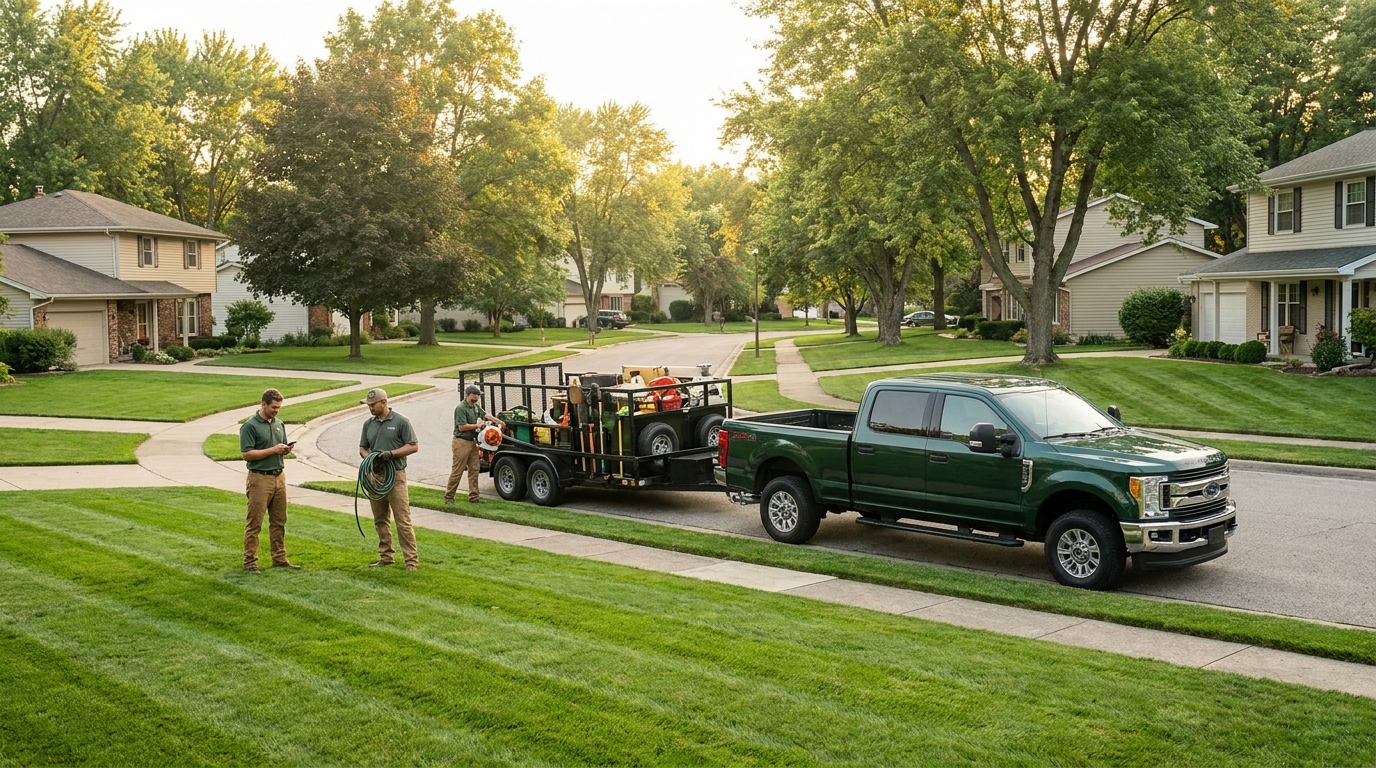
Margin improvement isn't one heroic move; it's a handful of disciplines compounding. In rough order of impact:
- Raise prices on purpose, every year. A standing 3–7% annual increase, communicated as routine, almost never costs you accounts — and it flows straight to the bottom line because the work didn't change.
- Densify your routes. The single biggest lever for a maintenance business. Cluster clients by neighborhood and day so crews spend their hours mowing, not driving. Good route optimization can recover that unbillable hour per crew per day — pure margin.
- Sell recurring contracts over one-off jobs. Recurring maintenance is predictable revenue you can build a crew around, and it carries far less sales cost per dollar. (See our guide on how to bill recurring landscaping clients without drowning in invoices.)
- Track profit at the job level. Total margin hides your worst accounts. When you can see that the big-name commercial property you're proud of actually loses money every visit, you can reprice it or fire it — both raise your average.
- Mark up materials consistently. A standard 15–30% markup on plants, mulch, and hardscape materials covers handling, waste, and the cash you float — and it's invisible to clients who expect it.
- Control overhead and claim every deduction. Overhead is where net margin is won or lost. Tight books plus disciplined tax deductions for landscapers — mileage, equipment depreciation, the home office — can add points to your net margin without touching a single price.
- Get paid faster and stop the float. A 20-day average collection delay across dozens of accounts is a permanent hole in your cash flow that you finance out of your own pocket. Online invoicing with a pay link closes that gap — the whole point of dedicated landscaping billing software.
Profit margin by service type
Not all landscaping work carries the same margin, and the smartest companies steer their mix deliberately. Rough gross-margin ranges by line of work:
| Service | Typical gross margin | Notes |
|---|---|---|
| Recurring maintenance / mowing | 40–55% | Low ticket, but predictable and route-dense — the margin backbone |
| Cleanups & one-offs | 35–50% | Higher rate, but travel and setup eat into it |
| Design & build / installs | 25–40% | Big ticket but materials-heavy; margin lives in accurate estimating |
| Irrigation & lighting | 40–55% | Specialty skill, less price-shopped — strong margin |
| Snow & ice (seasonal) | 40–60% | High margin, but weather-dependent and equipment-intensive |
The pattern: recurring maintenance gives you stable, route-efficient margin; design/build gives you big revenue but thinner, riskier margin that lives and dies on your estimate. A healthy business usually wants a maintenance base paying the overhead and a slice of higher-ticket installs on top — not all of one.
How to actually measure (and protect) your margin
You can't widen a number you don't watch. The owners who run 18% net margins aren't working harder than the ones at 8% — they're measuring what the others guess at:
- Separate direct costs from overhead. You need both gross and net, and you can't get them if labor, fuel, and the office phone bill all sit in one bucket. Clean categories are the foundation — our bookkeeping guide for landscaping businesses walks through the chart of accounts.
- Capture every expense, including the small ones. The $14 string-trimmer line and the $30 dump fee are exactly the costs that vanish from a shoebox of receipts and quietly overstate your margin. Logging them as they happen — or syncing straight to QuickBooks — keeps the number honest.
- Cost jobs individually. Tie labor hours, materials, and fuel to each job so you can see margin per account, not just for the company as a whole.
- Review monthly, not at tax time. A margin you discover in April is a year you can't fix. A margin you watch every month is one you can steer.
This is exactly the work landscaping software like Landscapey is built to take off your plate: jobs, expenses, routes, and invoices live together, so your real margin — gross and net, per job and overall — is a number you can see instead of a feeling you have at year-end. See what it costs (one plan, $19.99/mo) or start a free trial and put your own numbers in.
Frequently asked questions
Is a landscaping business profitable?
Yes — landscaping is a genuinely profitable trade when it's priced and run with discipline. Established companies typically net 5–20%, and solo owner-operators often keep 20–30% because they carry little overhead. It stops being profitable when prices go stale, routes sprawl, and small unbilled extras pile up — all fixable.
What is a good profit margin for a landscaping business?
A net profit margin of 10–20% is the target for an established landscaping company, with 15% a solid benchmark. Under 10% signals a pricing or efficiency problem worth fixing before you grow; gross margin should sit in the 30–50% range depending on your service mix.
How much do landscaping businesses make?
It varies enormously with size and margin. A solo operator might net $40,000–$70,000; a well-run two-to-three-crew company billing $400,000–$600,000 at a 12–18% net margin takes home roughly $50,000–$100,000 in owner profit on top of any salary. Revenue tells you the size of the operation; margin tells you what the owner actually keeps.
What's the difference between gross and net profit margin?
Gross margin is revenue minus the direct cost of the work (crew labor, materials, fuel) — it tells you if your pricing covers the job. Net margin subtracts everything else too (overhead, insurance, marketing, taxes) — it tells you what the business actually earned. Net is always the smaller, and more important, number.
How much do landscapers make per hour?
That's a different question from business margin. Landscaping employees in the U.S. commonly earn $16–$25 an hour. A business owner's effective hourly earnings depend entirely on margin and volume — which is exactly why widening your margin, not just billing more hours, is what raises your own pay. Capital equipment can move that margin sideways rather than up: on our house book, a robotic mower does not raise contribution at all but buys about 31% of price room on a defended route, which is a pricing decision dressed as an efficiency one.
Margin compounds twice, incidentally. At the 2.4x SDE median a buyer pays for a book this size, every $1,000 of margin you add is worth roughly $2,400 the day you sell — which makes a pricing decision an exit decision as well. That arithmetic is laid out in our piece on what a landscaping business is worth.