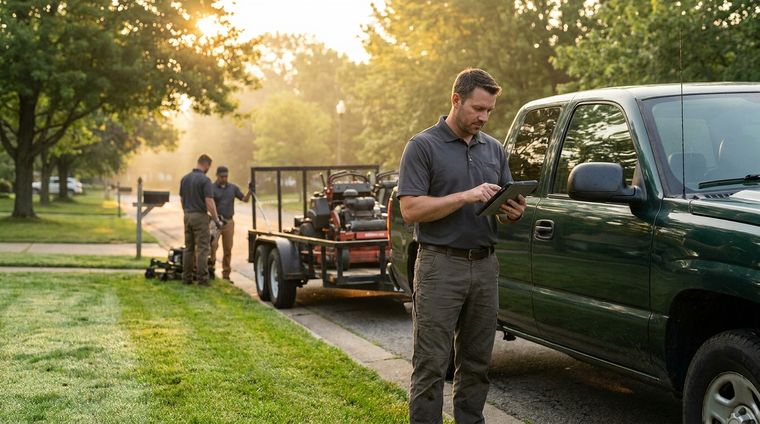
You probably know the feeling. You've got a crew scheduled, a client expecting progress, and one missing delivery can throw off the whole day. The mulch yard says the truck is on the way. The nursery says the shrubs were loaded. Your subcontractor says he thought the install was tomorrow. By lunch, you're rearranging the job instead of running it.
That's where vendor relationship management matters for a landscaping business. Not the corporate version with committees and thick binders. The version that helps a small operator keep jobs moving, avoid repeat mistakes, and become the customer the best local suppliers want to help.
A lot of vendor relationship management advice is built for large companies with complex procurement teams. That leaves a real gap for small service businesses managing only a handful of critical vendors, including contractors who depend on equipment or material suppliers, as noted in Hyland's discussion of VRM gaps for small operators. For most contractors, the right system is simple, practical, and light on paperwork. It's about clear expectations, fast communication, and keeping useful notes where you can find them when a job is live.
Table of Contents
- Your Vendor Roster Who to Manage and Why
- Simple Onboarding for Strong Partnerships
- Tracking What Matters with Vendor KPIs
- Proactive Communication and Problem Solving
- Centralizing Vendor Management in Your CRM
- The Payoff Better Vendor Relationships
Your Vendor Roster Who to Manage and Why
Most landscaping businesses don't have dozens of vendors that deserve equal attention. They usually have a short list that determines whether jobs stay on schedule. If you treat every supplier the same, you'll spend too much energy on low-impact relationships and not enough on the vendors that can save or sink a week.

The simple A B C sort
Forget the corporate matrix. Use a gut-check system.
| Tier | Who belongs here | What happens if they fail you | How closely to manage |
|---|---|---|---|
| A vendors | Primary nursery, main mulch or stone yard, go-to irrigation supplier, core subcontractor | Jobs stall, crews wait, clients notice | Very closely |
| B vendors | Backup nursery, secondary hardscape supplier, occasional rental company | You can recover, but it costs time | Moderately |
| C vendors | One-off rentals, occasional specialty item providers, vendors you rarely use | Limited impact | Light touch |
An A vendor is someone you'd notice immediately if they disappeared for two weeks. For many businesses, that's the nursery that knows your plant preferences, the yard that gets bulk material to site without drama, and the subcontractor who shows up when promised.
A C vendor might still be good. They're just not central. If you rent a stump grinder twice a year from a place across town, that relationship matters less than the supplier that touches three jobs every week.
Practical rule: The more a vendor affects schedule, rework, and client experience, the higher they belong on your list.
How to identify your real A team
Start with the vendors tied to your most common work. If you do maintenance, that might be your nursery, fertilizer source, and repair parts supplier. If you do hardscaping, it's often your paver yard, base material supplier, and equipment rental contact.
Use these questions:
- Which vendor can delay a crew fastest if they miss a delivery or send the wrong materials?
- Which vendor gets repeated orders because your business relies on them every month?
- Which vendor solves problems well when inventory is tight or weather changes the plan?
- Which vendor would be hardest to replace without a drop in service?
The mistake I see often is giving too much attention to price-shopping and not enough to reliability. Saving a little on stone doesn't help if the wrong size shows up and your install crew burns half a day waiting. Vendor relationship management works best when it's tied to the actual cost of disruption, not just the line item on the invoice.
What each tier deserves
Your A vendors should get a stronger relationship. That means early notice on upcoming work, quick answers, and fair treatment when problems happen. Your B vendors should stay warm because they're your backup capacity. Your C vendors just need clean records and basic expectations.
If you also use outside labor, this same mindset applies to subs. Keep your core trade partners in the same priority system you use for material suppliers, and tighten that process with practical habits from this guide on managing subcontractors in a landscaping business.
A short vendor list, organized by business impact, gives you something most small operators don't have. Clarity. And clarity leads to better decisions when the schedule gets tight.
Simple Onboarding for Strong Partnerships
Most vendor problems don't start with bad intentions. They start with missing details. Nobody confirmed who should receive the delivery. Nobody asked how invoices are sent. Nobody clarified whether the quoted plant size was container stock or balled-and-burlapped. Then the confusion shows up on job day.
A better approach is a short onboarding conversation. Not a formal procurement process. Not a stack of legal documents. Just a clean setup so both sides know how to work together.

Recent guidance around smaller and more informal vendor setups points out that most advice assumes contracts, annual reviews, and formal KPIs, while many lawn care and hardscaping businesses operate with spot buys and lighter agreements. That's why a relationship-first, contract-light approach built on transparency, consistent payment, and two-way dialogue fits better for small operators, as explained in Zapro's overview of vendor relationship management.
The 15 minute setup that prevents bigger headaches
When you start with a new supplier, gather the basics right away.
- Ordering contact: Get the name, phone number, and best hours for the person who handles orders.
- Billing contact: Make sure invoices don't go into a black hole.
- Emergency contact: For same-day issues, you need a direct line.
- Payment terms: Clarify when payment is due, how they want to be paid, and what they need on the remittance.
- Delivery process: Confirm where trucks should go, who signs, and what happens if nobody is on site.
- Current pricing: Ask for the latest price list, even if pricing changes often.
- Product substitutions: Find out whether they'll swap items without approval or hold the order for confirmation.
This isn't overkill. It's basic field protection.
Keep it conversational
A lot of small operators get stuck because they think “onboarding” sounds corporate. It doesn't have to. This can be a phone call, a counter conversation at the yard, or a short email follow-up after your first order.
Try language like this:
We do better work when we keep things simple. I just want to make sure I've got the right contacts, delivery process, and billing details so we don't waste time later.
That approach usually lands well because vendors want smooth jobs too. They don't enjoy redelivery, payment confusion, or repeated questions any more than you do.
What to document every time
After the conversation, write down the information somewhere permanent. At minimum, store:
- Primary and backup contacts
- What they supply
- Typical lead times
- Delivery rules
- Billing terms
- Any quirks that matter
Those quirks matter more than people think. Maybe one nursery confirms inventory only after 2 p.m. Maybe one yard needs the PO number in the text message. Maybe one supplier's dispatcher is excellent, but the office number goes unanswered. Those details are part of vendor relationship management because they affect how smoothly work moves.
Good onboarding doesn't make a vendor perfect. It makes expectations visible. And that alone cuts a lot of preventable friction.
Tracking What Matters with Vendor KPIs
Operations teams don't need a fancy dashboard to track vendor performance. They need a few measures that reflect what hurts or helps a job. Price matters, but price by itself is a poor way to judge a supplier. A cheap order that arrives late or wrong usually costs more by the end of the day.
A segmented, metric-driven approach has shown strong results in broader vendor management. Organizations using it saw a 25 to 30 percent improvement in on-time delivery and a 15 to 20 percent reduction in operational risk incidents within 12 months, according to benchmarks cited in TechnologyMatch's summary of Gartner and JPMorgan guidance. Small landscaping companies don't need the full enterprise version, but the principle holds up. Track a few useful numbers and use them to guide decisions.
Four KPIs worth tracking
| KPI | Landscaping example | What to log |
|---|---|---|
| On-time delivery | Mulch arrives when promised, not after the crew is idle | Promised time vs actual time |
| Order accuracy | You ordered 2-inch river rock and got the correct material | Right item, quantity, and spec |
| Material quality | Shrubs arrive healthy, pavers aren't chipped, sod isn't stressed | Acceptable or issue noted |
| Problem response | Vendor answers and fixes mistakes quickly | Time to callback and resolution |
These don't require software built for procurement teams. A note in your phone, a spreadsheet, or a CRM entry tied to the job is enough.
What each KPI really tells you
On-time delivery tells you whether the vendor respects your schedule. In landscaping, timing is labor. If a crew stands around waiting on a truck, your margin starts leaking immediately.
Order accuracy measures whether the vendor can follow detail. Wrong material isn't just annoying. It can trigger redesign, returns, and client questions.
Material quality separates suppliers who are merely available from suppliers who protect your reputation. A plant that looks rough at install reflects on you first, even if the nursery caused the issue.
Problem response is the hidden metric. Plenty of vendors perform well when everything is easy. The best ones show their value when something goes wrong and they act fast.
A vendor isn't just selling material. They're either supporting your schedule or putting pressure on it.
How to keep score without making it a second job
Don't build a reporting process so heavy that you abandon it. Use a simple pass-fail note after each meaningful order. Record the date, job, order amount if relevant, and whether there was any issue with timing, quality, or accuracy.
If you already track operational activity digitally, tie the vendor note to the same workflow you use for field execution. This kind of discipline gets easier when job details live in one place, especially if you already track work orders in a landscaping workflow.
How to use the information
Use your notes to spot patterns, not to punish every mistake. One late load during a storm isn't the same as three bad deliveries in a month. When a pattern appears, bring specifics.
Say this instead of “You guys have been off lately”:
On the last few orders, we had one late drop, one wrong quantity, and one quality issue on plant material. I want to keep buying from you, but we need to tighten this up.
That conversation goes better because it's grounded in facts. Good vendor relationship management isn't about acting tough. It's about making performance visible so both sides can improve.
Proactive Communication and Problem Solving
The strongest vendor relationships in landscaping usually don't come from contracts. They come from predictable communication. Suppliers remember the contractor who gives clear notice, answers the phone, and handles problems like a professional.

Here's a common scene. You scheduled a hardscape install. The base material was supposed to land at 7:30. It's now 8:20, the crew is on site, and nobody has seen the truck. This is the moment that reveals whether your vendor relationship management is working.
The communication rhythm that keeps you top of mind
Good vendors serve a lot of contractors. If you only contact them when you're upset, you become one more problem account. A simple cadence changes that.
- Early week heads-up: Send a short message about upcoming orders for the next several days.
- Order-day confirmation: For major deliveries, confirm the order details and timing after placing it.
- Same-day issue call: If something goes wrong, call first. Don't start with a frustrated text thread.
- Fast closeout note: When they fix a problem well, acknowledge it.
That last part matters. People remember customers who only complain. They also remember customers who notice good recovery.
How to handle a late delivery without making it worse
The wrong way is emotional and vague.
“You guys always do this. My crew is standing around.”
The better way is direct and usable.
We're on site now and still waiting on the base material for the Smith job. The crew is blocked. Can you confirm whether the truck is loaded, where it is, and the real ETA so I can adjust the day?
That message does three things. It states the problem. It explains the business impact. It asks for information that helps solve the issue.
If the answer is bad, keep going.
If this can't make it soon, tell me now. I'd rather rework the schedule with clean information than keep guessing.
That's the tone vendors respond to. Firm, but workable.
What to do after the fire is out
Once the material arrives and the job is moving again, don't just move on. Use a short follow-up.
- Confirm what happened
- Ask what should change next time
- Note the issue in your vendor record
Small businesses often lose the lesson. They survive the problem, then rely on memory. A few weeks later, the same issue happens again.
A short video can help frame this mindset around better business communication and supplier coordination:
Make it easy for vendors to succeed with you
Vendors tend to prioritize contractors who are easy to work with. That doesn't mean being passive. It means reducing confusion on your side too.
- Send complete orders: Include address, contact, material spec, and delivery window.
- Mark the site clearly: If access is tricky, explain it before the truck rolls.
- Pay consistently: Reliable payment builds goodwill fast.
- Escalate cleanly: If there's a recurring issue, go to the right person with examples.
The best local suppliers don't expect perfection. They expect clarity, consistency, and respect when something goes sideways.
That's what turns a transactional supplier into someone who squeezes your order in, calls you first when stock opens up, or helps fix a mistake before it reaches the client.
Centralizing Vendor Management in Your CRM
Friday at 3:40 p.m., a crew lead calls from a jobsite asking whether the gravel order included the compactable base or just the top layer. The estimator has one version in email. The yard texted an update to someone else. The owner remembers the change, but he is driving. That kind of scramble is what slows small service businesses down.
A CRM gives your team one place to check before they call three people and guess.

For a landscaping company, vendor management in a CRM does not need to look like corporate procurement software. You are usually managing a short list of nurseries, yards, haulers, irrigation suppliers, and a few specialty subcontractors. The win comes from keeping the right details in one record so anybody on the team can place an order, check a status, or solve a problem without starting from scratch.
What belongs in one vendor record
A good vendor record should answer field questions fast.
| Vendor record field | Why it matters |
|---|---|
| Primary contacts | So the office and crew leads call the right person the first time |
| Price sheets and files | So estimates, change orders, and reorders use current numbers |
| Delivery notes | So drivers know gate codes, tight access points, and unload instructions |
| Order history | So pattern problems show up before they become expensive habits |
| Payment notes | So billing disputes get handled with context, not memory |
| Job links | So you can see which active work depends on that supplier |
I also like to add three simple fields that save a lot of trouble. Backup contact, normal lead time, and preferred order method. If the main rep is off, stock is tight, or your office manager is out, those three details keep orders moving.
Why centralization pays off
The practical benefit is speed. A crew lead can confirm what was ordered. The office can answer a delivery question without waiting on the owner. An estimator can check the latest vendor pricing before sending a quote.
It also helps with judgment.
After a few months, your CRM stops being a contact list and starts becoming a record of how each supplier performs on your jobs. You can see who hits promised delivery windows, who needs cleaner paperwork, who solves mistakes quickly, and who burns time every other week. That matters for small landscaping businesses because supplier decisions are often relationship-first and contract-light. If you only work from memory, the loudest recent problem tends to outweigh the full pattern.
Keep the system light
Do not build a record so detailed that nobody updates it. Keep it simple enough that your team will use it during a busy week.
For many landscaping companies, one vendor record with contacts, files, notes, linked jobs, and a running activity history is enough. If your software already handles jobs, estimates, scheduling, and billing, it makes sense to use a CRM built for landscapers instead of forcing vendor information into spreadsheets and text threads.
Bottom line: Centralizing vendor information cuts delays, reduces repeat mistakes, and makes a small team less dependent on the owner's memory.
The Payoff Better Vendor Relationships
A truck is late, a plant list changes at 6:30 a.m., and a crew is waiting on site. In that moment, the supplier who knows your jobs, trusts your team, and expects clean payment will usually pick up the phone and help you sort it out.
That is the return on vendor relationship management for a small landscaping business. It is not polished paperwork for its own sake. It is faster answers, fewer jobsite surprises, and a better shot at getting help when inventory is thin or the week goes sideways.
The payoff shows up in small moments that protect margin. A nursery tells you the truth about what is available, so you can adjust before the crew loads out. A yard calls about a delivery issue early enough to reroute the day. A subcontractor makes room for your job because your scope is clear and your checks arrive when promised.
Those wins rarely show up as a line item in the estimate. They show up in labor hours you did not waste, rework you did not eat, and client headaches you did not have to smooth over.
For organizations, the best system is usually relationship-first and contract-light. You may only rely on five or six key suppliers. That makes consistency more important than complexity. Clear orders, quick problem resolution, and fair treatment do more for supplier performance than a thick vendor handbook ever will.
Start with one key supplier. Tighten up how you place orders, confirm delivery details, and log issues. Keep the process simple enough that your office and field team will stick with it during a busy season. Then repeat it with the next vendor that affects your schedule or material cost the most.
Over time, a loose supplier list turns into a dependable local network. That network is hard for competitors to copy, and it does not require a big budget to build.
Landscapey helps landscapers keep jobs, clients, schedules, invoices, and business records in one place, which makes vendor coordination easier too. If you want a simpler way to run the moving parts of your company, take a look at Landscapey.