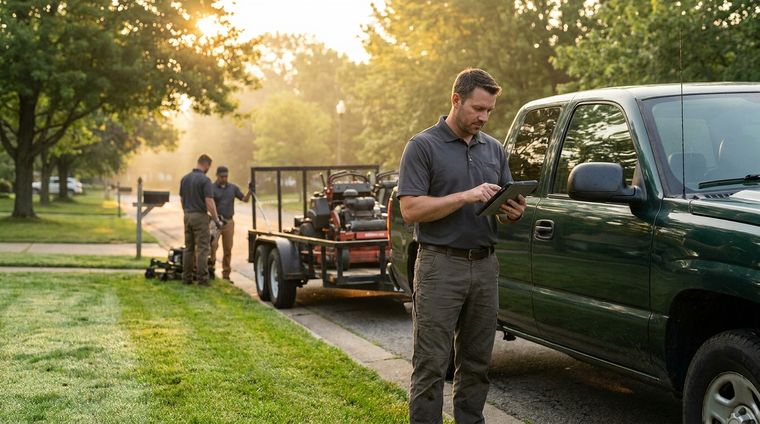
You're probably staring at a service area full of homes that need cleanup, mulch, pruning, or a full redesign, while the phone still isn't ringing the way you want. That gap is normal in landscaping, because the people who hire you usually start with a neighborhood search, a recommendation from a nearby homeowner, or a quick look at who looks active in their ZIP code. Local marketing techniques work because they meet that buyer where they already are, then push them toward a call, quote request, or booked visit.
For outdoor service providers, the best local work usually comes from a tight mix of visibility, proof, and follow-up. Search results, reviews, yard signs, postcards, referrals, neighborhood apps, and community presence all matter, but they only pay off when they're focused on the right streets and tracked cleanly in your CRM. That's where a system like Landscapey helps, because it keeps leads, jobs, routes, invoices, and public profile traffic in one place instead of scattering them across tools.
The list below gets straight to what works. Some tactics take almost no setup. Others need a little more effort but create stronger local trust and better long-term lead flow.
Table of Contents
- 1. Local SEO and Google Business Profile Optimization
- 2. Hyperlocal Direct Mail and Postcard Campaigns
- 3. Community Partnerships and Local Sponsorships
- 4. Customer Referral Programs and Incentives
- 5. Local Social Media Marketing and Community Engagement
- 6. Nextdoor and Neighborhood App Advertising
- 7. Strategic Google and Bing Local Paid Ads
- 8. Local Press and Community Media Relations
- 9. Home and Garden Show Booths and Event Presence
- 10. Email Marketing and Seasonal Newsletter Campaigns
- 10-Point Comparison of Local Marketing Techniques
- Putting Local Marketing Techniques into Action
1. Local SEO and Google Business Profile Optimization
If you only fix one thing first, fix your local search presence. Local marketing is tied to proximity-based search behavior, and Google's own local-search guidance notes that ads can show not only to people in a target area, but also to people searching about that area, which is why location settings and near me intent matter so much in local campaigns (Informi on effective local marketing).
For outdoor service businesses, the core move is simple. Claim and tune your Google Business Profile, then back it up with service pages that mention the neighborhoods, ZIP codes, and job types you serve. The Landscapey local SEO guide for landscapers is the right internal reference to connect this to your own site structure.
Practical rule: if your profile shows weak photos, thin service descriptions, or old hours, nearby homeowners will move on fast. They usually don't compare ten landscapers, they compare the first few that look active and trustworthy.
A strong profile needs more than a claimed listing. Add before-and-after photos of real jobs, post seasonal updates, and respond to every review within a day if you can. Reviews matter because customers are judging whether you're active, professional, and close enough to handle the work without hassle.
A good workflow is to pair the profile with local citation cleanup. Make sure your name, address, and phone number match everywhere you're listed, then keep your service descriptions natural, not stuffed with awkward keywords. A phrase like lawn maintenance in [ZIP code] reads better than generic homepage copy and helps reinforce relevance.
2. Hyperlocal Direct Mail and Postcard Campaigns
Direct mail still works when it's narrow and visual. Local businesses don't need to blanket a whole metro just to test demand, because neighborhood density often beats broad reach. One practical guide recommends focusing on just two or three ZIP codes, using branded yard signs for two weeks after a job, and placing door hangers within a three-block radius to build local proof and repeat exposure (Sideways8 landscaping marketing plan).

The best postcards show a transformation, not a logo. Use a strong before-and-after photo, a short offer, and a reason to act now, such as spring cleanup or fall leaf removal. If you run an outdoor services profile, put a QR code on the card that points straight to your public quote request page so the lead doesn't have to hunt for you later.
What usually works best
- Affluent streets with visible curb appeal problems: these homes tend to respond well to polished print pieces that show quality work.
- Seasonal timing: spring and fall mailings line up with homeowner demand and make the offer feel timely.
- Small tests first: a smaller batch lets you see which neighborhoods respond before you spend on wider drops.
The trade-off is that direct mail takes discipline. It's easy to print something pretty and never know which street produced the call. Add tracking codes or promo codes by neighborhood, then log every response in your CRM so you can stop guessing and start narrowing the route.
3. Community Partnerships and Local Sponsorships
A missed callback from a homeowner matters, but a warm introduction from the right local partner often matters more. Landscaping is still a trust business, and that borrowed trust can carry faster than a cold ad. Real estate agents, property managers, garden clubs, youth sports leagues, and neighborhood associations already speak to the audience you want, so their name attached to your work can carry real weight.
Partnerships work best when they create a clear path to work. A property manager who needs recurring maintenance, or a real estate agent who wants a yard cleaned up before closing photos, can send business your way with far less resistance than a generic flyer. Keep the arrangement simple enough that both sides can remember it, because if the process gets awkward, it usually stops.
A good partnership is not a logo swap. It is a repeatable referral path with a clear reason for both sides to keep using it.
Start with the easiest wins. Property managers often need ongoing upkeep, while real estate agents usually need quick turnarounds after closings, open houses, or move-ins. Chambers of commerce can still help with introductions, but the main value comes from one useful conversation that leads to regular work, not from collecting business cards that never turn into a call.
Sponsorships work best when they match the kind of customer you want. A youth sports team, neighborhood event, or garden club can put your name in front of families who notice curb appeal and yard upkeep, but only if the sponsorship gives you a real reason to be seen again. If the only return is a banner in a storage closet, the spend is probably too soft for a busy season.
Use your CRM to tag each partner source separately, then watch which ones turn into booked jobs. Track real estate agents, property managers, clubs, and event sponsors as different sources so you can see where the work is coming from and where it is not. If a sponsor does not generate leads after a few cycles, cut it loose and move that budget toward the partnerships that are closer to the street and easier to maintain.
4. Customer Referral Programs and Incentives
Your happiest customers already know people who need help with lawns, beds, irrigation, edging, or seasonal cleanup. A referral program just gives them a reason to speak up at the right moment. This is one of the cleanest ways to generate local work because the new prospect already trusts the name before the first call.
The mechanics should stay simple. Offer a reward that feels worth sharing, give both sides a benefit when possible, and make the referral easy to send by text, card, or form. A program buried in a footer won't move anything. A referral line on the invoice and in the thank-you email will.
Practical rule: if people have to think hard about how to refer you, they usually won't.
Use a short referral form inside your customer review management workflow so happy clients can leave feedback and refer a neighbor in the same motion. That keeps review generation and referral collection close together, which matters because both are proof signals for local buyers.
A few details make a difference:
- Make the ask after a completed job: that's when the value is freshest.
- Give the referred customer a reason to say yes: a small first-service discount helps lower the barrier.
- Track every code or name: if you don't know who referred whom, you can't reward the right people or spot your best advocates.
The main trade-off is margin. Referral rewards should feel valuable, but they still need to fit the economics of your average job. Keep the program visible, measurable, and easy to explain in one sentence.
5. Local Social Media Marketing and Community Engagement
Social media only works for yard care professionals when the feed looks local. That means actual jobs, recognizable streetscapes, seasonal changes, and homeowner questions answered in plain English. A polished outdoor space makeover is a strong visual asset, and it's even better when the post tags the neighborhood and invites local conversation.

The best local social accounts don't look like ads. They look like a contractor who's present in the community, knows what's blooming, and can explain why one yard drains better than another. That style builds familiarity before the estimate call.
Keep the cadence practical
- Post real jobs regularly: before-and-after content gives people a quick reason to remember you.
- Tag every location: geotags help local users discover nearby work.
- Answer messages quickly: homeowners often move on if the reply lags.
You can also use short-form video for transformations, especially on TikTok and Reels. A quick clip of pruning, hardscaping, or mulch installation feels more believable than a polished brand video with no context. If you run geo-targeted social ads, keep them tied to a seasonal need, not a vague brand pitch.
The risk here is inconsistency. One strong month won't carry a weak feed forever. Pick a few repeatable content themes, seasonal maintenance, project reveals, and quick tips, then batch them so your account stays active even during busy job weeks.
6. Nextdoor and Neighborhood App Advertising
Nextdoor is one of the clearest places to watch local intent in real time, because homeowners openly ask for recommendations when they need help fast. That makes it useful for home service businesses who want neighborhood-level visibility without wasting spend on people outside the service area.
Verified business profiles matter here. If someone asks for a local professional and you show up with useful, timely answers, you're not interrupting the conversation, you're entering it. That's a different kind of lead capture than search ads, and it often feels more personal to the homeowner.
The best use of Nextdoor is a mix of paid and organic presence. Paid ads can target specific neighborhoods, while organic posts can answer questions about seasonal care, pruning, and cleanup. The balance matters because hard selling in local neighborhood feeds can backfire quickly.
Use a tight radius and keep offers simple. A neighborhood-specific promotion feels more relevant than a city-wide blast, especially if you serve only a few high-value pockets. Put your best photos in the profile, then make sure the response tone sounds like a real local pro, not a canned ad.
The trade-off is scale. Nextdoor can be excellent for focused demand, but it's not the place to build a giant brand campaign. Treat it like a neighborhood reputation channel, then log every message and call in your CRM so you can tell whether the channel is producing quality jobs or just chatter.
7. Strategic Google and Bing Local Paid Ads
A homeowner searches for help after a storm, or a property manager needs a crew before the weekend. Paid search catches that moment better than almost any other channel, as long as the targeting stays tight. For outdoor service providers, the strongest setup is location-based intent around terms like lawn care near me, lawn care [city], and garden design [ZIP code], because those searches usually come from people already close to booking.
Google Local Services Ads are often the first place to test because they sit near the top of results and are built for lead capture. Keep the ad set narrow if you are testing a new area, and send traffic to a dedicated landing page instead of the homepage. That keeps the message aligned with the search and makes it easier to see which calls are worth the spend. The Landscapey guide on power washing ads is a good model for that kind of discipline, especially the focus on matching the offer to the service area and tracking calls cleanly.
What a workable setup looks like
- Use call extensions: mobile searchers want to tap and talk, not dig through pages.
- Add location extensions: service areas should be clear right away.
- Pause weak terms fast: broad traffic can burn budget without producing booked work.
One landscaping guide recommends service-specific landing pages of 300 to 500 words for each service and city combination, plus a page that loads in under three seconds with click-to-call at the top. It also recommends starting paid search tests at $500 to $1,000 per month and tracking calls and form fills instead of clicks because those actions line up better with booked work (Tofu landscaping marketing ideas).
The hardest part is discipline. Paid search performs best when it stays local, specific, and tied to actual jobs, not just traffic. If the clicks are coming in but the calls are poor, the fix is usually the message, the radius, or the landing page. A bigger budget just makes the wrong setup more expensive. For crews using a specialized CRM, every call, form fill, and booked estimate should flow into the same pipeline so you can compare lead quality by service, area, and ad group without guessing.
8. Local Press and Community Media Relations
Local press still carries weight because people trust familiar media outlets to tell them what's happening in their area. For a local business, that means newspapers, radio, neighborhood blogs, and local magazine features can all reinforce credibility in a way ads can't.
The strongest media angles are not generic company updates. Awards, community projects, seasonal expertise, or a visible site transformation give reporters a reason to care. A story about a neglected community garden, for example, feels useful to readers and gives you a natural place to show craftsmanship.
Practical rule: media outreach works better when you give editors a neighborhood story, not a sales pitch.
Build a small media list and keep it current. Local reporters, radio hosts, and bloggers are easier to reach when you already know what beats they cover. If you have a team member who can speak clearly about seasonal care, drought stress, or renovation planning, make that person the point of contact and keep a short media kit ready.
The primary trade-off is time. Press relationships grow slowly, but when one local outlet starts paying attention, the credibility spillover can help every other channel. Reuse the coverage on your site, in social posts, and in your estimate follow-up emails so the work keeps paying off.
9. Home and Garden Show Booths and Event Presence
Face-to-face marketing still matters in landscaping because many homeowners want to see examples before they hand over a project. Home expos, garden shows, and community festivals give you a place to show finished work, explain services, and collect leads from people who are already thinking about outdoor upgrades.
The booth itself should be visual first. Large project photos, before-and-after boards, and a simple lead form do more than a table full of brochures. If you can demo design software or walk a homeowner through a rough layout, even better, because it turns a vague idea into a real conversation.
The timing matters. Spring home expos and fall garden shows usually match homeowner planning cycles, so the conversations feel timely rather than forced. A show-exclusive offer can also help create urgency without lowering your price across the board.
Lead quality often beats lead volume here. Some people will be ready now, while others need weeks or months to decide. Collect their contact info, tag the source in your CRM, and send a follow-up sequence that keeps your company in front of them after the event ends.
The downside is obvious. Booths cost time, staffing, and prep, and not every event is worth repeating. Track which shows produce estimates and booked work, then stop attending the ones that only generate casual interest.
10. Email Marketing and Seasonal Newsletter Campaigns
An outdoor maintenance specialist who already has a customer list has one of the easiest local marketing wins available. Email reaches past clients, estimate requests, and maintenance accounts at the exact moments when they start thinking about cleanup, planting, pruning, or repairs, and it keeps your name visible without paying for every touch.
The best newsletters stay short and practical. Open with one useful tip, add one seasonal offer, then close with a clear booking button. If you sort your list by service type, you avoid sending hardscape ideas to lawn-only customers or spring cleanup reminders to people who only hire you for mowing.
Keep the cadence tied to the calendar
- Spring cleanup reminders: send before crews get booked out.
- Fall maintenance reminders: send before leaf drop and the rush that follows.
- Winter prep updates: stay in front of dormant accounts so you are not starting from zero next season.
A steady monthly rhythm works well for most landscaping lists, as long as the content stays useful. Keep the balance close to 70% tips, 20% promotions, and 10% CTAs, and use seasonal automation for spring cleanup in March, fall maintenance in August, and winter prep in November. That structure gives people a reason to open the message instead of treating it like another sales blast.
List quality is the main trade-off. If the wrong contacts get the wrong email, open rates and replies fall fast, and the message starts training people to ignore you. Segment by service, tag every lead source in your CRM, and keep subject lines plain, such as Spring Cleanup Checklist Inside, so the email matches the reason they would click in the first place.
10-Point Comparison of Local Marketing Techniques
| Strategy | Implementation Complexity | Resource Requirements | Expected Outcomes | Ideal Use Cases | Key Advantages |
|---|---|---|---|---|---|
| Local SEO & Google Business Profile Optimization | Medium, setup + ongoing optimization and verification | Low monetary cost; time for content, citations, and review management; SEO tools optional | High-intent organic leads; results in ~3–6 months; compounding visibility | Ranking for "landscaper near me" and sustained local lead flow | Free platform listing; maps/local-pack visibility; trust via reviews |
| Hyperlocal Direct Mail & Postcard Campaigns | Low–Medium, design, targeting, printing logistics | Moderate–high per-piece cost ($0.50–$1.50); design/printing and fulfillment time | Tangible touchpoints; low response rate (0.5–2%) but high-quality seasonal leads within 1–2 weeks | Affluent ZIP codes, seasonal promotions, new service launches | Cuts through digital noise; physical engagement; trackable with codes/QRs |
| Community Partnerships & Local Sponsorships | Medium–High, relationship building and ongoing commitments | Low–moderate financial cost; significant time and networking effort | Long-term referrals and brand recognition; ROI harder to quantify; steady referral stream | Building trust, realtor/property manager referrals, community visibility | Local credibility, referral pipeline, low-cost sustained exposure |
| Customer Referral Programs & Incentives | Low, program setup and tracking required | Low variable cost per referral; CRM/tracking system recommended | Highest-quality leads; lower customer acquisition cost; slower, organic growth | Businesses with satisfied customers aiming to scale via word-of-mouth | Best lead quality; cost-effective acquisition; increases customer loyalty |
| Local Social Media Marketing & Community Engagement | Medium, consistent content creation and community management | Low ad spend possible; time or hire for content and engagement; basic tools | Builds awareness and portfolio reach; follower growth 6–12 months; leads via organic and paid posts | Visual portfolio promotion, younger homeowners, shareable transformations | Highly visual and shareable; user-generated social proof; geo-targeted ads available |
| Nextdoor & Neighborhood App Advertising | Low, profile setup and neighborhood-level ad targeting | Moderate ad spend per neighborhood ($100–300/month); time to engage locally | Highly targeted neighborhood leads; good conversion; smaller but high-trust audience | Hyperlocal targeting of specific neighborhoods and affluent blocks | Neighbor recommendations build trust; lower competition; high conversion per ad |
| Strategic Google & Bing Local Paid Ads | Medium, campaign setup, bidding, and ongoing optimization | Variable ad spend (clicks $2–$10+); PPC expertise and monitoring; Local Services Ads setup | Immediate visibility; high-intent leads; scalable but stops when budget ends | Rapid lead generation during peak season; competitive markets needing immediate reach | Fast results; measurable conversions; captures ready-to-book searches |
| Local Press & Community Media Relations | High, PR outreach, story development, and relationship building | Low direct cost but time-intensive; PR skills or agency help useful | Earned credibility and long-term visibility; unpredictable timing but high trust | Community projects, awards, expert positioning, credibility campaigns | Third-party validation; long-lasting indexed coverage; credibility boost |
| Home & Garden Show Booths & Event Presence | Medium, booth design, staffing, and event logistics | Moderate–high event costs ($500–$5,000); staff time for event days | Direct face-to-face qualified leads; immediate lead capture; variable ROI per event | Seasonal home/garden expos when homeowners plan projects | Personal rapport with prospects; live demos and portfolio showcase; vendor networking |
| Email Marketing & Seasonal Newsletter Campaigns | Low–Medium, list building, segmentation, and content calendar | Low monthly platform cost ($15–$300); time for content and automation; CRM integration | High ROI (often very profitable); predictable recurring revenue and repeat bookings | Past customers, maintenance reminders, seasonal upsells and re-engagement | Highly measurable and automatable; excellent ROI; drives repeat business |
Putting Local Marketing Techniques into Action
The strongest local marketing techniques for contractors do not depend on a single channel. They work because they support each other. A homeowner sees your truck in the neighborhood, your Google Business Profile looks active, your postcard shows a real project, and your follow-up email reminds them you are still available. That mix builds trust faster than any one tactic alone.
The practical way to start is to pick a few channels that fit your current capacity. A solo operator can begin with Google Business Profile updates, referral asks, and seasonal email reminders. A growing crew can add direct mail, paid search, and Nextdoor ads. A company with steady installs can add sponsorships, media outreach, and event booths after the core lead flow is stable.
Tracking matters just as much as the marketing itself. As noted earlier, search listings, nearby social targeting, local directories, and customer follow-up are all part of the same system, because you need to know which neighborhood, channel, or partner created the lead. If you are not logging calls, quote requests, referrals, and booked jobs by source, you are guessing. That makes it hard to see which efforts deserve more time and which ones only create activity.
A good CRM turns that tracking into something your crew can use every day. A public profile can turn local search into quote requests, while the CRM keeps those requests attached to the right customer, route, and invoice. When your team can see which ZIP codes are converting, which partners are sending referrals, and which follow-ups get answers, it becomes easier to spend money where it matters and cut the tactics that only add noise.
Start with one move this week. Clean up your local search presence, send one neighborhood referral email, or launch a small postcard test in your best ZIP code. Then open Landscapey, connect your leads and jobs, and build the local system that keeps nearby customers coming back all season.