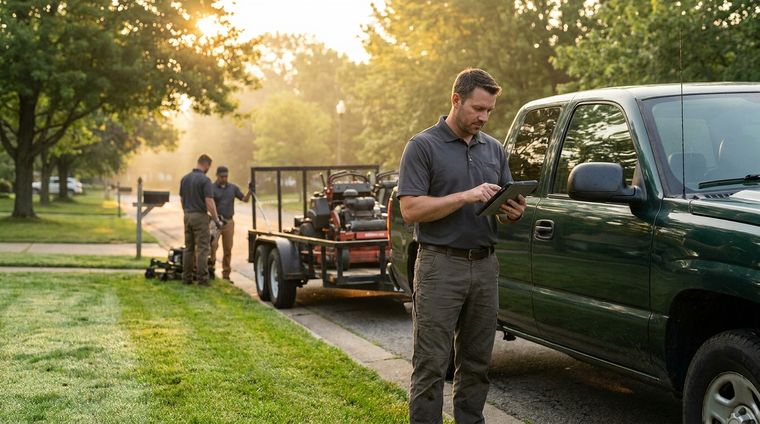
If you're looking out at a Decatur lawn that's thinning in the heat, growing unevenly after spring rain, or getting crowded by weeds around the edges, you're not alone. A lot of Central Illinois yards look fine in April, then struggle by midsummer because the work was timed wrong, the mower was set too low, or the lawn was treated like it lived in a different climate.
That's the difference with local lawn care in Decatur, IL. Our lawns are mostly cool-season turf, and they respond best to a plan built around Kentucky bluegrass, fescue, and perennial ryegrass. The right mowing height, the right watering pattern, fall aeration at the right time, and attention to Illinois fertilizer rules all matter here. Generic national advice usually skips the details that keep a Macon County lawn healthy.
Table of Contents
- Comprehensive Lawn Care Services We Offer in Decatur
- A Year-Round Lawn Care Schedule for Decatur IL
- Understanding Lawn Care Costs in Decatur
- Our Service Area in Decatur and Surrounding Neighborhoods
- Your First Step Getting a Free Quote and What to Expect
- Why Decatur Homeowners Trust Our Lawn Care Team
- Frequently Asked Questions About Decatur Lawn Care
Comprehensive Lawn Care Services We Offer in Decatur
A healthy Decatur lawn needs more than regular cutting. It needs a service mix that matches our weather swings, our cool-season grass types, and the wear that comes from summer stress and compacted soil. Good lawn care is part maintenance, part timing, and part restraint. Doing too much at the wrong time can hurt turf just as fast as neglect.

Mowing built for cool-season turf
Mowing is where most lawn problems start. In Decatur, the turf usually performs best when it's cut high enough to shade the soil and protect the crown. For Midwest lawns like ours, mowing height should stay in the 2.5 to 3.5 inch range, and the one-third rule matters. Never remove more than one-third of the blade in a single cut, according to the Chicago Botanic Garden lawn care guidance.
That means the mower schedule has to change with growth. Spring growth may call for more frequent cuts. Summer usually calls for patience, sharper blades, and a higher deck setting.
Practical rule: If a lawn has gone too long between cuts, bringing it down in one pass usually does more damage than leaving it slightly taller for a week.
We include trimming and edge work with mowing because overgrown lines around sidewalks, beds, and fences make even a healthy lawn look neglected. But trimming needs a light hand. String trimmers scalp easily around roots, mailbox posts, and exposed soil.
Feeding, weed control, and turf recovery
Fertilization in Decatur works best when it supports root growth and turf density, not just top growth. A lawn that gets pushed too hard can look green for a short stretch and then struggle in heat. The better approach is a balanced program tied to turf condition, season, and site-specific pressure from weeds.
Weed control matters most when the lawn is thin. Dense turf is the first defense. Product choice and timing help, but they won't fix bad mowing habits, compacted soil, or weak germination after summer stress.
Core aeration is one of the most useful services for many Decatur yards, especially where foot traffic, mowing patterns, and heavier soils leave the ground tight and sealed over. For Midwest lawns, aeration is recommended every 1 to 2 years, ideally in early fall, using a plug-removing machine rather than a spike unit, as noted in the Chicago Botanic Garden guidance already referenced above. That timing lines up well with overseeding, when cool-season turf can recover and fill bare spots.
A complete service plan usually includes:
- Routine mowing: Keeps turf even, protects the crown, and reduces stress from irregular cutting.
- Targeted fertilization: Supports steady growth without forcing weak, shallow top growth.
- Weed control: Helps prevent broadleaf weeds and grassy intruders from taking over thin areas.
- Aeration: Opens compacted soil so water, oxygen, and nutrients can move into the root zone.
- Overseeding: Thickens worn turf and helps repair bare or weak patches after summer.
- Pest observation: Watches for turf damage patterns so problems get addressed before large sections decline.
What doesn't work is copying a one-size-fits-all plan from a national website. Decatur lawns need service decisions based on how the turf is growing on your property, not what worked in another state on a different grass type.
A Year-Round Lawn Care Schedule for Decatur IL
A Decatur lawn rarely fails all at once. Problems build over the year. Spring sets density, summer exposes weaknesses, and fall decides how strong the lawn comes back. When the schedule is off, the turf pays for it later.
Seasonal priorities that actually fit Decatur
Early spring is cleanup and reset time. That usually means removing winter debris, checking for snow mold residue or matted turf, sharpening mowing plans, and getting ahead of early weed pressure. The main goal is to wake the lawn up without overworking soft, wet ground.
Late spring is the stretch when growth comes fast. That's when mowing frequency matters most. If the lawn gets too tall and then gets cut aggressively, it thins out quickly. This is also the time to watch for uneven color, drainage issues, and spots that didn't come through winter well.
By summer, the job changes from pushing growth to protecting roots. In Decatur, cool-season grasses need 1.0 to 1.5 inches of water per week, including rainfall, applied once or twice weekly to moisten the top 6 to 8 inches of soil, according to this Illinois lawn care guide for cool-season turf. That same guidance warns against shallow, frequent watering because it encourages weak roots and more heat stress.
Watering every day for a few minutes usually makes a Decatur lawn more fragile, not healthier.
In practical terms, summer care often means mowing a little higher, reducing unnecessary stress, and accepting that turf may slow down when the heat settles in. A lawn doesn't need to be forced through July. It needs to be protected.
Fall is the best recovery season for many yards in Central Illinois. This is when aeration, overseeding, and repair work pay off. Seed gets better contact after cores are pulled, and cooler conditions help young grass establish without the same heat pressure you get in midsummer.
Winter is mostly about restraint. There's less active lawn work, but property owners can still cause damage by piling snow in the same spots, driving over frozen turf, or leaving heavy debris on dormant grass.
Decatur lawn care calendar at a glance
| Season | Key Services | Primary Goal |
|---|---|---|
| Early Spring | Cleanup, first mowing adjustments, weed monitoring | Start growth cleanly without stressing wet soil |
| Late Spring | Regular mowing, fertilizer timing, turf evaluation | Build density and keep growth even |
| Summer | Deep watering, higher mowing, stress reduction | Protect roots during heat |
| Fall | Aeration, overseeding, repair work | Rebuild thickness and strengthen turf |
| Winter | Limit traffic, monitor drainage and debris | Prevent avoidable damage during dormancy |
A lot of homeowners only call after summer damage shows up. That's understandable, but the strongest lawns in Decatur are usually the ones that got simple, steady work at the right time all year.
Understanding Lawn Care Costs in Decatur
Pricing gets clearer when you look at what you're buying. Lawn care isn't just time on site. It's labor, equipment wear, travel, scheduling, materials, and the judgment to avoid doing the wrong thing at the wrong time.
As of July 2026, the average annual pay for a lawn care professional in Decatur is $38,212, or about $18.37 per hour, according to ZipRecruiter's Decatur lawn care salary data. That local wage baseline helps explain why professional service pricing can't be compared fairly to a quick cash mow from someone with a push mower and no schedule discipline.
What drives the price
The first factor is property size, but size alone doesn't tell the whole story. Two lawns can have the same square footage and take very different amounts of time. A flat, open yard is faster to service than one with fences, steep transitions, landscaping beds, gates, toys, pet areas, or a lot of trimming detail.
The second factor is service scope. A mowing-only customer pays for a different kind of visit than a homeowner who needs weed control, fertilization, aeration, and overseeding as part of the year. The more complete the program, the more the result depends on timing and repeat visits rather than one appearance.
A third factor is frequency and condition. A lawn maintained on a regular route is easier to keep in shape. A neglected lawn often needs extra passes, bagging, cleanup, or a slower recovery plan.
If you're a homeowner trying to make sense of proposals, it helps to review a clear landscaping estimate template that breaks down service line items. That kind of format makes it easier to compare what's included instead of just staring at a total.
How homeowners can compare quotes fairly
The cheapest quote is often cheap because something has been left out. That might be trimming, edging, debris removal, return visits, or honest communication about timing.
Use this checklist when comparing lawn care prices:
- Ask what's included: Mowing, trimming, edging, and cleanup shouldn't be assumed.
- Ask how timing is handled: Good lawn care depends on seasonal order, not random availability.
- Ask how problem areas are treated: Thin turf, compacted spots, and shaded sections need different decisions.
- Ask who is doing the work: Crew consistency matters. So does whether the company actually knows cool-season turf.
A fair lawn care price in Decatur should reflect steady service, local judgment, and fewer headaches for the homeowner. That's what people are really paying for.
Our Service Area in Decatur and Surrounding Neighborhoods
Local service matters more than people think. Lawn care is easier to do well when the crew knows which neighborhoods dry out faster, where mature trees create heavy shade, and where properties tend to need more edging, more cleanup, or a different mowing rhythm.

Neighborhoods and nearby communities we know well
We serve homeowners across Decatur and in nearby communities where lawn conditions often overlap but property layouts can differ a lot. That includes:
- South Shores: Lawns near Lake Decatur often need careful attention around moisture patterns and shoreline-adjacent areas.
- West End: Mature trees, older lots, and root competition can change how turf fills in.
- Lincoln Park: Family yards here often see steady foot traffic and need durable, dense turf.
- Long Creek: Larger properties and edge areas can call for a more customized maintenance plan.
- Forsyth: Spacious lots often combine open sun exposure with long mowing routes.
- Mt. Zion: Growing neighborhoods and mixed lot types benefit from dependable recurring service.
Why local routing matters
In the Decatur area, there are 85+ lawn mowing services listed, according to Thumbtack's Decatur lawn care marketplace. In a crowded market like that, local knowledge and efficient planning make a real difference. A provider who knows the area can cluster stops better, show up more consistently, and avoid turning your service window into an all-day guessing game.
The best lawn company for your house isn't always the biggest one. It's often the one that already works nearby and understands how yards in your part of town behave.
That kind of familiarity cuts down on missed details. It also helps homeowners get service that feels predictable, which is half the battle with recurring maintenance.
Your First Step Getting a Free Quote and What to Expect
Most homeowners want the same thing at the start. A clear answer, a fair quote, and no confusion about what happens next. That process should feel simple.

What happens after you reach out
The first step is usually a phone call, text, or short web form. From there, the lawn care company should ask a few practical questions. Your address, the services you want, whether the yard is fenced, and what problem you're trying to solve are the basics.
If you say, “I just need mowing,” that quote path is different from, “My backyard is thinning, and I want the lawn thickened back up by fall.” A good provider won't force both situations into the same template.
Some companies can quote quickly using property details and service notes. Others may want an on-site look if the yard has unusual access, slope changes, drainage trouble, or a lot of obstacles. Either way, the quote should explain the work in plain language.
If you want a sense of how other lawn businesses describe recurring upkeep and homeowner expectations, this lawn maintenance example from another market is useful as a comparison point.
What the first visit looks like
Once you approve service, the first visit is usually the one that tells everyone the most. The crew observes the lawn's condition, checks turf height, notes stressed areas, and adjusts for what the property needs instead of what it looked like from the street.
For a mowing customer, that first service may include:
- Initial cut and trim based on current height and turf condition.
- Edge cleanup along sidewalks, beds, and driveways.
- Problem-spot notes for thin areas, wet sections, or spots that may need different care later.
For treatment or seasonal work, the first visit often includes a closer evaluation of compaction, density, and whether the lawn is a good candidate for overseeding or a repair program later in the season.
The smoothest lawn care relationships start when expectations are clear from day one. You should know what's being done, what isn't included, and what the next step will be if the lawn needs more than basic maintenance.
Why Decatur Homeowners Trust Our Lawn Care Team
Trust in lawn care isn't built with slogans. It's built when the crew shows up, cuts at the right height, notices problems early, and communicates without making the homeowner chase updates.

What trust looks like in practice
Homeowners usually stay with a lawn care company for practical reasons:
- Reliability: The lawn gets serviced when it should, not when it's convenient for the crew.
- Consistency: The yard looks like the same standard was applied every visit.
- Judgment: The company doesn't scalp in summer, seed at the wrong time, or overpromise on damaged turf.
- Communication: If weather shifts the plan, the customer hears about it.
One reason stronger operators stand out is that they run cleaner internal systems. For lawn companies trying to improve scheduling, customer communication, and route consistency, tools like lawn care business software can help support the kind of dependable service homeowners notice.
A trustworthy lawn crew doesn't just do the work. They make it easy for the homeowner to know what's happening and why.
A service relationship that stays simple
A good lawn service should lower stress, not add to it. That means clear billing, simple scheduling, and no mystery around what happened on the property that day.
Homeowners in Decatur also tend to value common-sense local knowledge. They want someone who understands cool-season lawns, knows that some yards stay wet longer in spring, and doesn't treat every property like a copy of the last one.
That's usually why trust lasts. Not because of flashy promises, but because the work stays steady and the lawn responds.
Frequently Asked Questions About Decatur Lawn Care
Do you treat lawns with pets and kids at home
Yes, but the key is communication and timing. A responsible lawn care company should tell you what's being applied, what the lawn needs afterward, and whether there's any waiting period before normal use. Homeowners should always mention pets, play areas, and any sensitive parts of the yard before service starts.
What happens if it rains on service day
That depends on the service and the condition of the property. Light rain may not stop some visits, but saturated soil changes things fast. Mowing wet turf can leave ruts, clumps, and torn grass blades. Treatment timing can also shift if weather would reduce effectiveness or create unnecessary runoff risk.
How do you handle fertilizer near ponds, drainage ditches, or water
This is one of the most overlooked parts of lawn care in Decatur, IL. Illinois law prohibits spreading fertilizer within 3 feet of water when using equipment with a deflector, or within 15 feet without one, based on the Illinois turf fertilizer BMP guide. On properties near water, drainage channels, or similar edges, the application plan needs to account for those buffer requirements from the start.
That matters in Macon County because a lot of homeowners assume standard treatment methods apply everywhere on the property. They don't. Good lawn care near water means adjusting the spread pattern, the equipment setup, and in some cases the treatment area itself.
When is the best time to start service
The best time is usually before the lawn looks rough. Starting early gives the provider time to manage mowing height, monitor weed pressure, and line up the right seasonal work before the grass is already stressed. But even if your lawn is already struggling, a local company can still map out what should happen now and what's better saved for fall recovery.
If you want help with lawn care in Decatur, IL, the next step is simple. Ask for a quote, get clear on the service plan, and choose a team that knows how Central Illinois lawns really grow.
Landscapey helps lawn and yard care pros run the kind of organized operation homeowners trust. If you're building or growing a local service business, Landscapey brings your leads, scheduling, route planning, invoicing, payments, and bookkeeping into one place so you can spend less time juggling tools and more time serving your customers well.